
What is Sandtray Therapy
Giving Voice to the Subconscious.
What is Sandtray therapy?
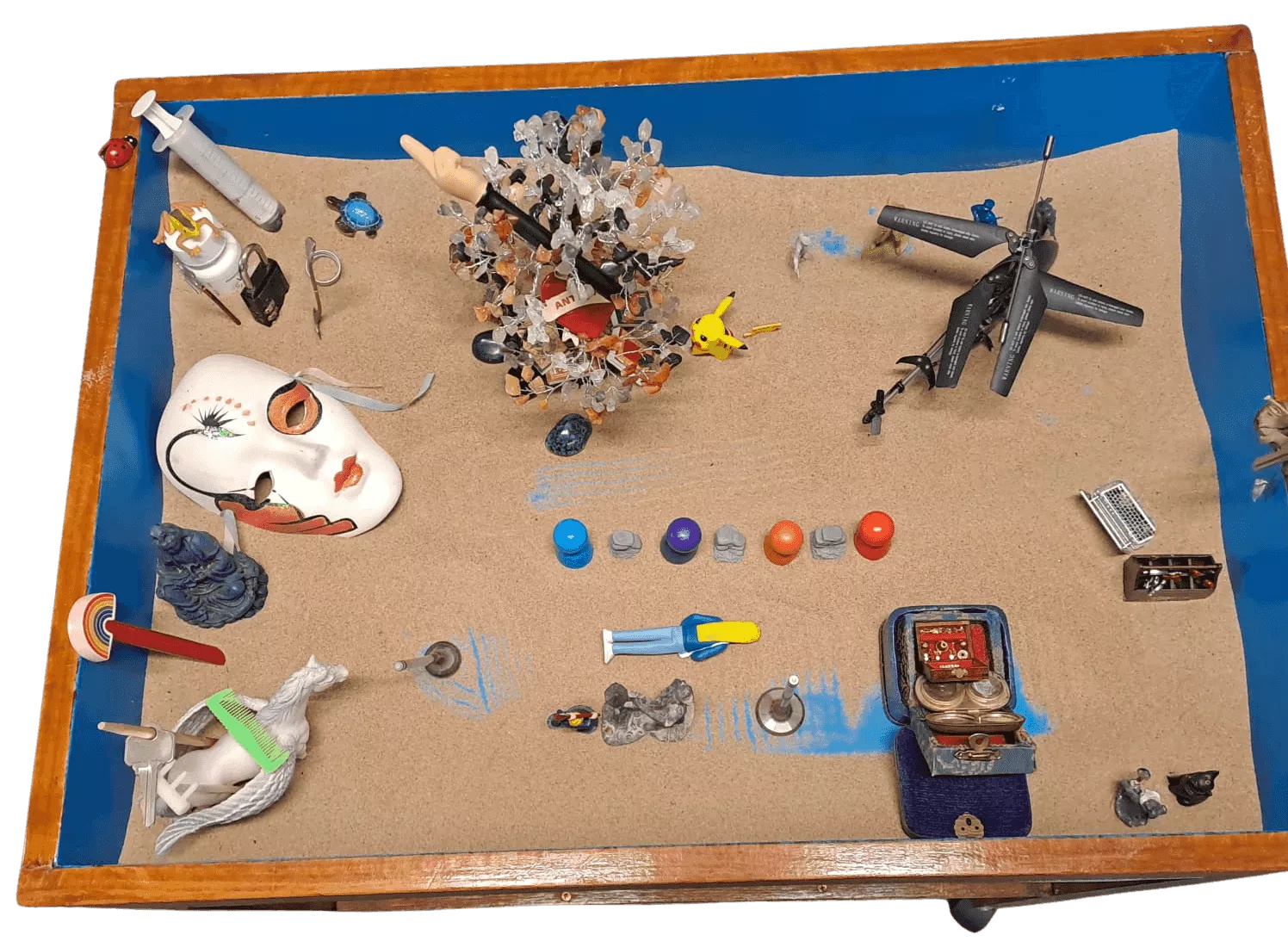
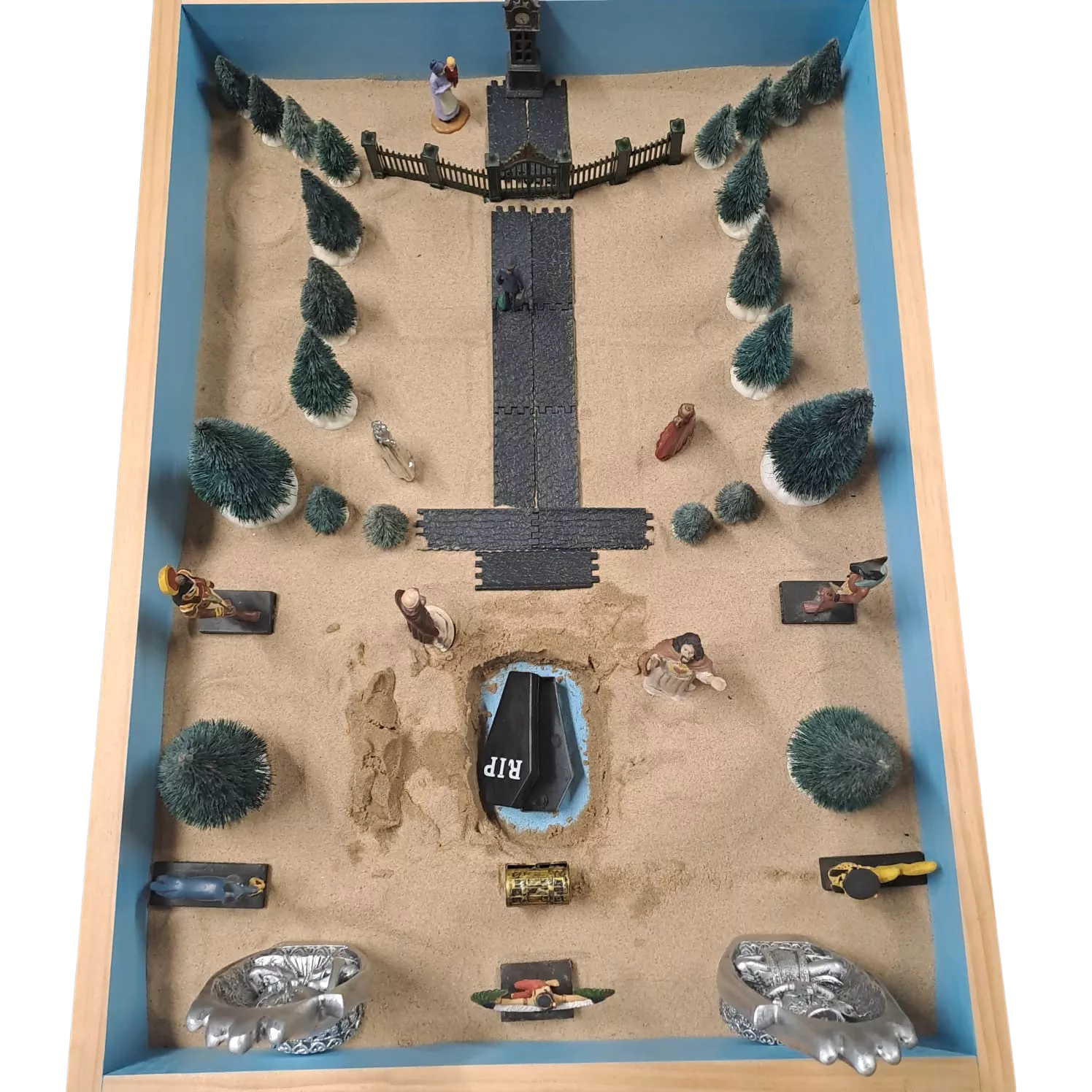
Sandtray Therapy is a creative and experiential approach to counselling that uses a tray of sand
and miniature figures to help individuals express and explore their inner world. This technique
provides a safe, nonverbal way to communicate thoughts, feelings, and experiences that may be
difficult to express in words. For all ages.
How does Sandtary Therapy work?
Clients select and arrange miniatures in the sand to create scenes that represent their emotions,
relationships, or life experiences. Through this process, they gain insight, process emotions, and
discover new perspectives in a supportive environment.
Who Can Benefit?
Sandtray Therapy is widely used with:
Children
To support emotional expression and development.
Adults
For trauma recovery, anxiety, grief, and personal growth.

Specialist
For trauma recovery, anxiety, grief, and personal growth.
Families and Groups
To improve communication and strengthen relationships.
Why Choose Sandtray Therapy?
- Encourages self-expression without pressure to find the right words.
- Helps uncover unconscious thoughts and patterns.
- Creates a safe and contained space for healing and growth.
Benefits of Sandtray Therapy
Non-Verbal Expression
Sandtray therapy offers clients a powerful way to communicate their inner thoughts and emotions
without relying solely on words. This non-verbal approach is particularly beneficial for individuals who find it challenging to articulate their feelings or experiences verbally.
Safe and Supportive Exploration
The sandtray provides a contained and emotionally safe space for clients to explore difficult emotions, past experiences, and inner conflicts. Within this supportive environment, clients can gain insight and achieve healing at their own pace.
Creative Problem-Solving and Self-Awareness
By constructing scenes in the sandtray, clients externalize their inner world, allowing them to view
challenges, relationships, and solutions from a new perspective. This process encourages creative
problem-solving, deeper self-understanding, and the development of effective coping strategies.
Strengthening the Therapeutic Relationship
The collaborative nature of sandtray work fosters trust and connection between client and therapist.
As clients feel seen, heard, and supported, a strong therapeutic alliance emerges-an essential foundation for meaningful growth and transformation and healing.
Where does Sandtary Therapy come from?
“Often the hands will solve a mystery that the intellect has struggled with in vain.”
– Carl Jung
Sandtray is not a new fancy type of Therapy. it actually is generally attributed to Carl Jung’s work in the early to
mid-20th century, likely around the 1930s-1940s, when Jung was deeply exploring symbolism,
creativity, and the unconscious.
What our clients have said
“I felt truly heard and supported throughout my sessions. The Sandtray Therapy helped me express things I couldn’t put into words.”
Client, Trauma Recovery
“The creative process in Sandtray Therapy gave me clarity and peace during a very difficult time of grief
Client, Grief Support
and loss.”
“Sylvia’s approach is compassionate and empowering. Her guidance during my AOD recovery journey made all the difference.”
Client, AOD Recovery
Visit us at 123 Example St. Manhattan, NY 10300, United States